
Data Storage UAE Electronic Invoicing
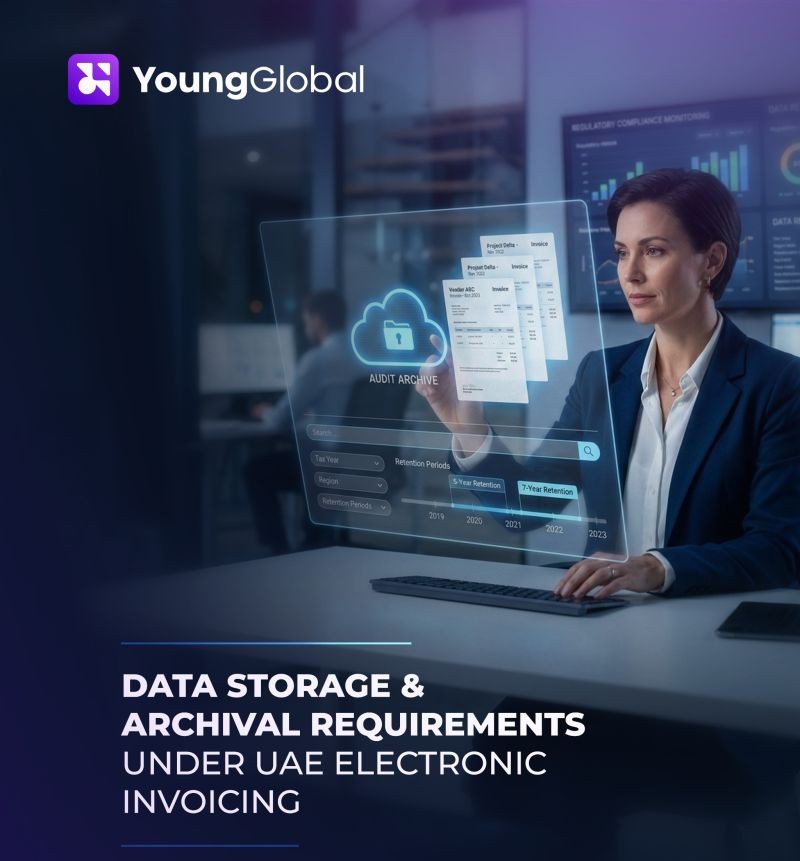
Data Storage & Archival Requirements Under UAE Electronic Invoicing
As the UAE moves deeper into its digital tax transformation, understanding the data retention and storage obligations under the Electronic Invoicing framework is essential for all businesses.
Under Article 3(1) of the Tax Procedures Executive Regulation, the retention periods for data relating to the issuance, transmission, and receipt of Electronic Invoices are as follows:
- 5 years after the relevant Tax Period for Taxable Persons
- 5 years from the end of the calendar year in which the document was created for non‐taxable persons
- 7 years from the end of the calendar year for real estate records
In addition, Taxable Persons must retain records for an extra 4 years in cases involving disputes, ongoing audits, or notifications of intended audits by the FTA. Where a voluntary disclosure is submitted within the fifth year, records must be kept for an additional 1 year.
Article 11 of MD No. 243 of 2025 further requires that Electronic Invoices, Electronic Credit Notes, and associated data be stored “within the State” in line with statutory timelines. Importantly, this does not mandate that servers or databases be physically located in the UAE. Instead, businesses must ensure:
- Records are stored in a secure electronic system that preserves integrity
- Data whether stored inside or outside the UAE can be promptly provided to the FTA upon request
- All records are retrievable and reproducible in a complete, readable format
For clarity, “associated data” refers only to information necessary to validate the integrity, authenticity, and auditability of an Electronic Invoice or Credit Note. It does not include general business documents or ancillary commercial information unless required to confirm the accuracy of the invoice record itself.
As compliance expectations evolve, businesses should review their data governance, storage infrastructure, and retrieval capabilities to ensure full alignment with the UAE’s Electronic Invoicing requirements.
Contact us today at 055 689 0505 or [email protected] for expert e-Invoicing support and compliance advisory.